A China itinerary by arrival city is often more realistic than choosing a route from a generic top-10 list. Your first airport affects jet lag, hotel choice, train or flight connections, visa-free or transit logic, and how smoothly the trip begins.
For the full planning system, start with our China itinerary guide: China itinerary guide
China itinerary by arrival city: the short answer
Use this logic:
- Arrive Beijing: build a history-first route.
- Arrive Shanghai: build an easy modern-first route.
- Arrive Guangzhou: build a Canton Fair or South China route.
- Arrive Shenzhen: build a Hong Kong / business / supplier route.
- Arrive Chengdu: build a Sichuan or western China route.
- Arrive Xi’an: use it as a focused history entry only if flights make sense.
If you arrive in Beijing
Best routes:
- Beijing + Shanghai for 7 days;
- Beijing + Xi’an + Shanghai for 10 days;
- Beijing + Xi’an + Chengdu + Shanghai for 14 days.
Beijing is best if your first China goal is history, the Forbidden City and the Great Wall.
Beijing guide: Beijing for first-time visitors
If you arrive in Shanghai
Best routes:
- Shanghai + Beijing;
- Shanghai + Beijing + Xi’an;
- Shanghai + Guangzhou + Shenzhen for business;
- Shanghai + nearby city if you want a lighter route.
Shanghai is often the easiest first arrival city for visitors who want a softer landing.
Shanghai guide: Shanghai for first-time visitors
If you arrive in Guangzhou
Best routes:
- Guangzhou only for Canton Fair or business;
- Guangzhou + Shenzhen;
- Guangzhou + Shenzhen + Hong Kong connection;
- Guangzhou + Shanghai if business continues east.
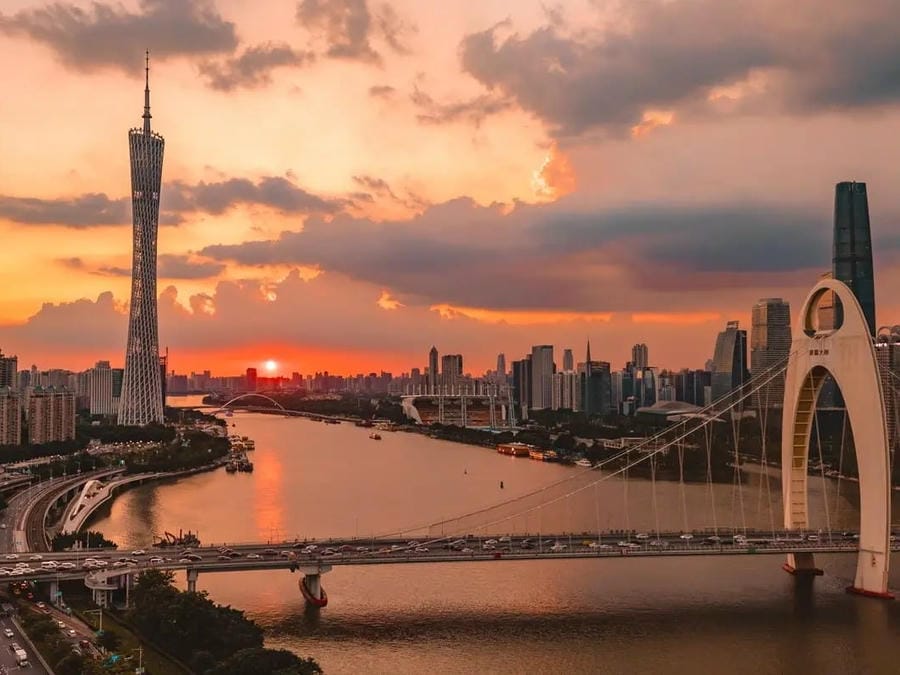
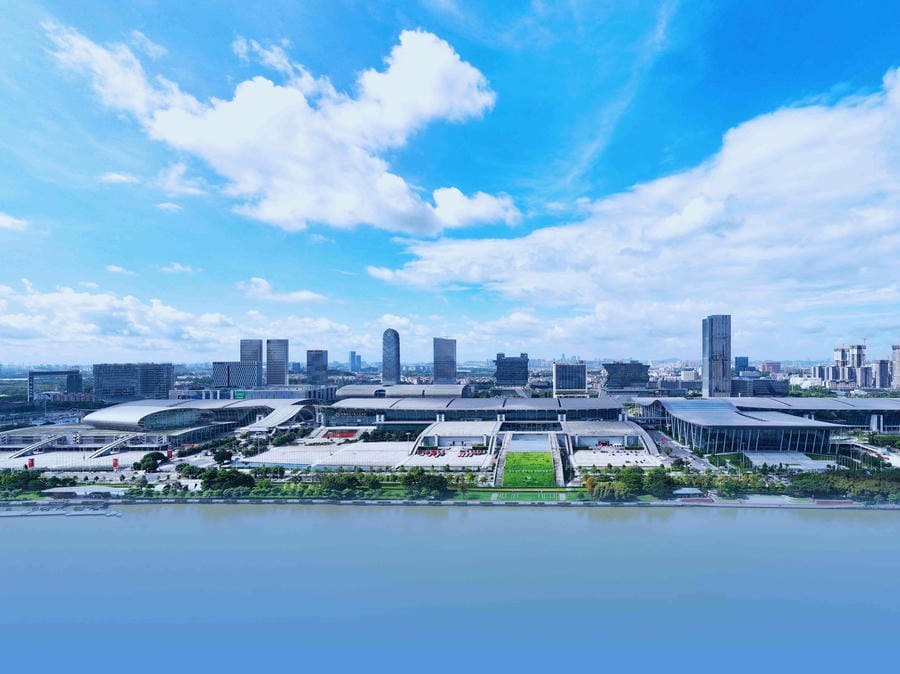
Guangzhou is best for Canton Fair, Cantonese food and South China business.
Guangzhou guide: Guangzhou for first-time visitors
If you arrive in Shenzhen
Best routes:
- Shenzhen + Hong Kong connection;
- Shenzhen + Guangzhou;
- Shenzhen + Guangzhou + Shanghai;
- Shenzhen + suppliers / factories by district.
Shenzhen is stronger for business than classic sightseeing.
Shenzhen guide: Shenzhen for business travelers
If you arrive in Chengdu
Best routes:
- Chengdu + Xi’an;
- Chengdu + Xi’an + Beijing;
- Chengdu + Shanghai for departure;
- Chengdu as base for Sichuan-focused travel.
Chengdu is best for pandas, Sichuan food and a slower regional route.
Chengdu guide: Chengdu for first-time visitors
If you arrive in Xi’an
Xi’an is an excellent destination, but usually not the easiest first international entry city.
Use Xi’an arrival if:
- the flight route is convenient;
- your trip is history-focused;
- you plan Xi’an + Beijing or Xi’an + Chengdu;
- you accept a less common first-arrival route.
Xi’an guide: Xian for first-time visitors
Entry and visa-free transit warning
If using visa-free transit, arrival city matters. NIA’s 2025 announcement says eligible applicants must hold valid travel documents, meet third-country entry requirements, hold confirmed interline tickets to a third country or region within 240 hours, and apply at eligible ports.
Entry guide: China entry and visa guide
Best entry cities guide: best China entry cities
Common mistakes
Do not choose an arrival city only by airfare.
Do not ignore first-night hotel transfer.
Do not use a visa-free transit route without checking port and onward-ticket rules.
Do not land in Shenzhen for classic sightseeing unless business or Hong Kong logic matters.
Do not arrive late at night with no payment, eSIM or taxi plan.
How to make this route work in practice
The biggest mistake with a China itinerary is treating every transfer as just the time shown on a map. A better planning method is to add time for station entry, security, luggage storage, hotel check-in, payment setup and the first local metro or taxi ride. This keeps the route realistic and makes the trip feel smoother.
For most first-time visitors, one major travel move per day is enough. If you arrive by high-speed train in the afternoon, plan a simple evening near your hotel instead of adding a major attraction across the city. If you have an early flight or train the next morning, stay closer to the departure point or choose an area with direct metro access.
Use this itinerary as a framework rather than a fixed schedule. Travelers who care about museums, food, shopping or business meetings should trade activities within the same city instead of adding another city. That usually improves the trip more than squeezing in an extra stop.
Planning sources and assumptions
Itineraries should be checked against current train times, airport schedules, attraction opening days and city transport changes. Use official railway, airport, metro and attraction pages for the final booking details, then use this guide to judge pacing and trade-offs.
The routes here assume a first-time visitor who wants a realistic pace rather than a maximum city count. If you travel with children, heavy luggage, business meetings or jet lag, remove one activity before adding another.
External checks before booking
Before booking a route, check official destination and transport information rather than relying only on a sample itinerary. Good starting points include the official Travel China tourism site, Beijing Tourism, and Shanghai’s official Travel in Shanghai portal. Use those pages for current events, attraction context and city-specific changes.
FAQ
What is the best arrival city for a first China itinerary?
Shanghai is often easiest, Beijing is best for history-first trips, and Guangzhou is best for Canton Fair or South China business.
Should I build my China itinerary around the arrival city?
Yes. Arrival city affects first-night comfort, route direction, transfer cost and visa-free or transit logic.
Is Xi’an a good arrival city?
It can work, but Xi’an is usually better as a destination within a route than as the first international entry city.
Should business travelers enter through Guangzhou or Shenzhen?
Use Guangzhou for Canton Fair and South China trade. Use Shenzhen for technology, suppliers and Hong Kong connection.
Last reviewed
Last reviewed: 2026-08-04
Sources checked: NIA 240-hour transit announcement; Destinations and Entry clusters; Transport cluster. Recheck ports, routes and airport details before publishing.