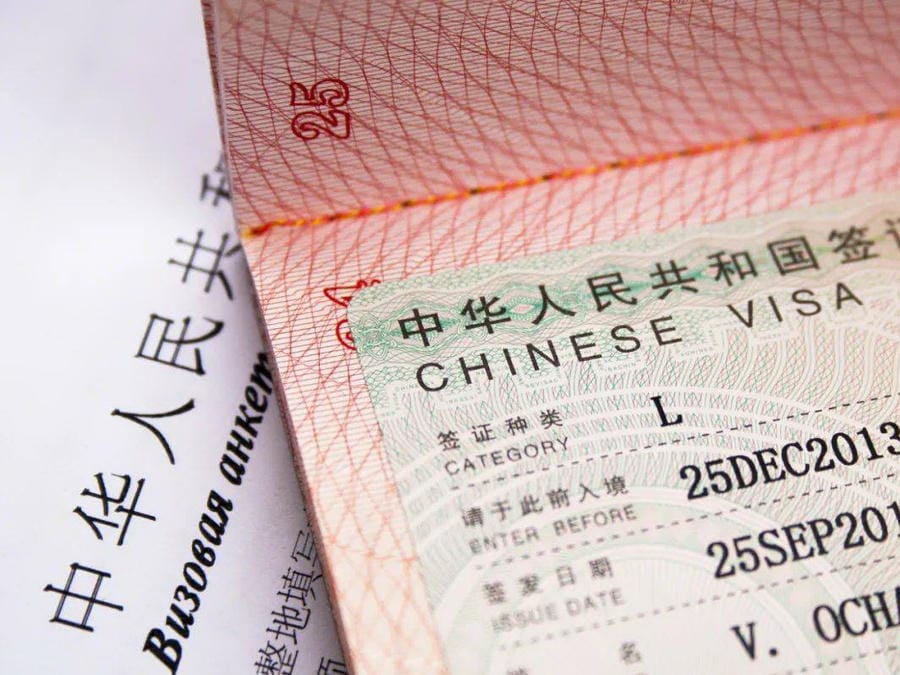
Before planning a China trip, answer one question first: what is your legal entry path?
For foreign visitors, the answer is not always simply “get a visa” or “no visa needed.” Depending on your passport, route, purpose of travel, and length of stay, you may enter China through one of several routes:
- an ordinary Chinese visa;
- a 30-day visa-free entry policy for eligible ordinary passport holders;
- the 240-hour visa-free transit policy;
- the 24-hour direct transit policy;
- an airside layover without entering China;
- a special arrangement such as a mutual visa exemption agreement.
This guide helps you understand the main entry routes and what to prepare before you arrive at Chinese immigration.
The short answer
Use this order to check your China entry path:
- Are you from a visa-free country? If yes, check whether your passport type, purpose of visit, and stay length qualify.
- Are you transiting through China to a third country or region? If yes, check the 240-hour or 24-hour transit rules.
- Are you visiting for work, study, journalism, long-term stay, or another regulated purpose? You probably need the correct visa in advance.
- Does your route involve Hong Kong, Macao, or Taiwan? For transit rules, these may count as separate third countries or regions, but always check the exact route rules.
- Can your airline board you? Airlines may check documents before departure and may deny boarding if your route or documents do not clearly qualify.
If you are unsure, check official sources before booking non-refundable flights.
Start with your travel purpose
Your travel purpose matters because not every entry path covers every activity.
Common short-term purposes may include:
- tourism;
- business visits;
- visiting relatives or friends;
- exchange visits;
- transit.
Activities such as work, study, journalism, or activities requiring prior approval usually need the appropriate visa before travel. Do not assume visa-free entry or visa-free transit can be used for work or long-term activities.
Main China entry paths for foreign visitors
1. Ordinary Chinese visa
You may need an ordinary visa if:
- your passport country is not covered by a visa-free policy;
- your travel purpose is not covered by visa-free entry;
- your stay is longer than the visa-free limit;
- your route does not qualify for transit without visa;
- you are entering for work, study, journalism, or other regulated activities.
This Pillar does not replace official visa application guidance. For visa applications, check the Chinese embassy or consulate responsible for your country or region.
2. 30-day visa-free entry
China has expanded unilateral visa-free entry for ordinary passport holders from selected countries. At the last source check for this draft, the National Immigration Administration’s English list, compiled according to Ministry of Foreign Affairs information as of February 17, 2026, covered 50 countries and stated that eligible ordinary passport holders may enter China visa-free for business, tourism, visits to relatives and friends, exchange visits, or transit for stays of up to 30 days.
Important points:
- It applies only to listed countries and ordinary passports.
- The allowed stay is usually up to 30 days.
- The stay period is calculated from 00:00 on the day following the date of entry according to NIA wording.
- It does not mean every purpose is allowed.
- It does not remove airline or border inspection checks.
Future detailed guide: China visa-free countries
3. 240-hour visa-free transit
The 240-hour visa-free transit policy is for eligible travelers who transit through China to a third country or region.
This is not the same as normal visa-free tourism. It depends on:
- your nationality;
- your travel document validity;
- your confirmed onward ticket;
- your route;
- your entry port;
- your exit plan;
- your permitted stay area.
At the last source check for this draft, the NIA’s November 3, 2025 announcement said the 240-hour transit policy applied to citizens of 55 eligible countries, through 65 ports in 24 provinces, autonomous regions, and municipalities. The announcement also says eligible travelers need valid international travel documents, interline tickets or proof documents for travel to a third country or region within 240 hours, and must complete the Arrival Card for Temporary Entry Foreigners.
Future detailed guide: 240-hour visa-free transit in China
4. 24-hour direct transit
If you are only connecting through China within 24 hours and do not leave the restricted area of the port, a different direct-transit situation may apply.
The NIA’s November 3, 2025 announcement says eligible passengers with international interline tickets transiting to a third country or region within 24 hours through certain airports may be exempted from immigration inspection procedures if they do not leave the airport restricted area.
This is different from entering China to visit the city. If you want to leave the airport, you may need to complete immigration inspection and qualify for a temporary entry route.
Future detailed guide: China visa-free transit
5. Layover with airport exit
Some travelers ask: “Can I leave the airport during a China layover?”
The practical answer is: only if your passport, route, onward ticket, port, timing, and immigration approval allow it. Having a long layover does not automatically give you the right to enter mainland China.
If you plan to leave the airport, check:
- whether you qualify for 24-hour temporary entry or 240-hour visa-free transit;
- whether your onward ticket is to a third country or region;
- whether your port participates in the policy;
- whether your planned city is inside the allowed stay area;
- whether you have enough time for immigration, transport, return check-in, and security.
Future detailed guide: leaving the airport during a China layover
How to know which path applies to you
Use this decision flow.
Step 1: Check your passport country
First, check whether your ordinary passport is covered by China’s current visa-free entry policy or 240-hour visa-free transit policy.
Do not rely on old blog posts, social media comments, or airline forum posts. Entry rules changed several times between 2024 and 2026.
Step 2: Check your passport type
Some policies apply to ordinary passports only. Diplomatic, service, refugee, stateless, emergency, temporary, or other travel documents may be treated differently.
Step 3: Check your travel purpose
Tourism, business visits, family visits, exchange visits, and transit may be covered under some policies. Work, study, journalism, and other regulated activities may require visas or prior approval.
Step 4: Check your stay length
For 30-day visa-free entry, do not plan a stay that exceeds the allowed duration. For 240-hour transit, the time calculation is specific and generally starts from 00:00 on the day following entry, based on NIA wording.
Step 5: Check your route
For transit without visa, your route must be a real transit route to a third country or region. A simple round trip such as Country A → China → Country A usually does not qualify as transit.
Hong Kong, Macao, and Taiwan may count as separate regions for transit-route purposes, but you should still check the exact route and ticketing.
Step 6: Check your port and stay area
The 240-hour policy applies only through designated ports and allowed stay areas. Even if your nationality qualifies, the wrong port or route can make you ineligible.
Step 7: Check airline boarding requirements
Airlines often check whether passengers have the documents needed for entry or transit. If your route is unclear, the airline may refuse boarding before you even reach China.
What to prepare before China immigration
Prepare these before departure:
- passport with enough validity;
- valid Chinese visa if needed;
- proof of visa-free eligibility if applicable;
- confirmed onward or return ticket;
- hotel booking or stay address;
- contact information in China if applicable;
- travel itinerary;
- proof of destination-country entry eligibility if transiting;
- Arrival Card information;
- phone with working mobile data;
- payment setup for arrival transport.
Related guide: Payments in China
China arrival card and immigration process
Foreigners entering China may need to complete arrival information. The NIA announced online filling of the Arrival Card effective November 20, 2025. The announcement says foreigners may fill in entry information online before coming to China through the NIA official website, Government Service Platform, NIA 12367 app, WeChat or Alipay mini programs, or QR code.
If you cannot complete it online before arrival, the NIA announcement says you may complete it at the port by QR code, smart devices, or paper Arrival Card.
Some categories may be exempt, including certain permanent resident ID holders, direct 24-hour transit passengers who do not leave the restricted area, same-cruise passengers, and others listed by NIA.
Future detailed guide: China arrival card and immigration process
Can you leave the airport during a China layover?
Do not decide based only on layover length.
You need to check whether you are allowed to enter mainland China temporarily. A 10-hour or 15-hour layover may still not be enough if immigration, baggage, transport, traffic, return check-in, and security take too long.
You should consider staying airside if:
- your layover is short;
- your route does not clearly qualify;
- your documents are incomplete;
- your onward flight is on a separate ticket;
- you are unfamiliar with the airport;
- you cannot risk missing the next flight.
You may consider leaving the airport only if your route clearly qualifies and the timing is realistic.
Common mistakes to avoid
Do not assume “visa-free” means all passports and all purposes are covered.
Do not assume 240-hour transit is the same as normal tourism visa-free entry.
Do not book Country A → China → Country A and call it transit.
Do not assume every Chinese airport offers the same transit procedure.
Do not assume you can leave the airport just because your layover is long.
Do not forget to check whether your final destination requires a visa.
Do not arrive without your hotel address or onward ticket details.
Do not rely on outdated 72-hour or 144-hour transit guides without checking the 240-hour update.
Recommended setup by traveler type
First-time tourist
Check whether your country is on the 30-day visa-free list. If not, check whether you need a tourist visa before departure. Prepare arrival card information, hotel booking, payment setup, and internet access.
Visa-free traveler
Check passport country, passport type, travel purpose, and stay length. Keep proof of accommodation and return/onward travel.
Transit traveler
Check whether your itinerary is a real transit route to a third country or region. Confirm your entry port, exit plan, onward ticket, stay area, and timing.
Business traveler
Do not assume business meetings are always covered by visa-free rules. Check whether your activity is a short business visit or requires a specific visa. Canton Fair visitors should check both entry rules and fair registration documents.
Canton Fair visitor
Confirm entry eligibility early. Prepare hotel bookings, invitation or registration materials if applicable, payment setup, internet access, and local transport plan before arriving in Guangzhou.
Related planning guides
FAQ
Can I enter China without a visa?
Possibly. It depends on your passport, passport type, travel purpose, stay length, route, and current policy. Check whether you qualify for 30-day visa-free entry, 240-hour visa-free transit, 24-hour direct transit, or another official arrangement.
What is China’s 240-hour visa-free transit policy?
It is a transit policy for eligible nationals traveling through China to a third country or region. It is not the same as ordinary visa-free tourism and depends on nationality, route, ticketing, port, timing, and stay area.
Is Hong Kong considered a third country or region for China transit?
For many transit-without-visa route checks, Hong Kong and Macao are treated as separate regions. You should still verify your exact route with official sources and your airline.
Do I need an arrival card for China?
Many foreign visitors need to provide arrival information. NIA introduced online Arrival Card filling from November 20, 2025, with options to complete it before travel or at the port if needed. Some categories are exempt.
Can I leave the airport during a China layover?
Only if you are allowed to enter temporarily under the applicable rule and the immigration authority approves entry. A long layover alone is not enough.
Do I need a visa for business meetings in China?
It depends on the type of business activity, your passport, stay length, and current policy. Short business visits may be covered under some visa-free policies, while work or activities requiring prior approval need the correct visa.
What documents should I carry for China immigration?
Carry your passport, visa if needed, onward or return ticket, hotel or stay address, travel itinerary, destination-country entry proof for transit, and arrival card information.
Last reviewed
Last reviewed: 2026-07-03
Sources checked: 2026-07-03
Sources checked
Official / authoritative:
- National Immigration Administration — List of Countries Covered by Unilateral Visa Exemption Policies
- National Immigration Administration — Announcement on Implementing 10 New Measures to Support the Expansion of Opening-up and Serve High-quality Development
- National Immigration Administration — How to Submit Your Arrival Card to China Online
- National Immigration Administration — Guidelines for Foreigners
Supporting / background: