A good China itinerary is not just a list of famous cities. It should balance arrival days, transfer time, rest, major sights, hotel areas, high-speed trains, flights, payments, mobile data and booking decisions. For first-time visitors, the best route is usually the one that is realistic, not the one with the most cities.
This guide explains how to build a first-time China route that works on the ground.
China itinerary: the short answer
For a first China trip:
- 5–6 days: one major city, or one city plus a nearby add-on.
- 7 days: two cities.
- 10 days: three cities.
- 12–14 days: three to four cities.
- Business trip: fewer cities, more buffer.
- Canton Fair trip: plan around fair phases first, then add leisure cities.
Do not count international arrival day as a full sightseeing day. Do not count a long train or flight day as a normal city day.
How to build a realistic China itinerary
Use this order:
- Choose your arrival and departure cities.
- Count full days, not calendar days.
- Choose cities by role, not fame.
- Decide train vs flight for each transfer.
- Add rest and buffer.
- Choose hotel areas by route logic.
- Check major attraction booking rules.
- Prepare payments, mobile data, apps and passport-based ticketing.
Destinations guide: best cities to visit in China for first-time visitors
Route rule 1: count arrival days honestly
The first day in China is often not a full day.
You may need time for:
- immigration;
- baggage;
- airport transfer;
- hotel check-in;
- eSIM or roaming troubleshooting;
- payment app setup;
- jet lag;
- first meal;
- finding your hotel area.
A realistic first day should be light: hotel check-in, nearby food, short walk and early sleep.
Entry guide: China entry and visa guide
Internet guide: China eSIM and internet guide
Route rule 2: limit city count
China is large. Every added city creates friction:
- hotel checkout;
- station or airport transfer;
- security checks;
- waiting time;
- train or flight;
- arrival transfer;
- new hotel check-in;
- new payment/map/transport context.
For a first trip, fewer cities often means a better trip.
Best cities by trip length: best China cities by trip length
Route rule 3: use city roles
Each city should have a job.
- Beijing: classic history and Great Wall.
- Shanghai: modern China and easy arrival.
- Xi’an: Terracotta Army and ancient China.
- Chengdu: pandas, Sichuan food and slower pace.
- Guangzhou: Canton Fair, Cantonese food and South China business.
- Shenzhen: technology, suppliers, business and Hong Kong connection.
Do not add a city unless it changes the trip meaningfully.
7-day China itinerary
Best route for most first-time visitors:
Beijing + Shanghai
Suggested structure:
| Day | City | Main role |
|---|---|---|
| Day 1 | Beijing | Arrival, hotel, light food/walk |
| Day 2 | Beijing | Forbidden City / central sights |
| Day 3 | Beijing | Great Wall day trip |
| Day 4 | Beijing to Shanghai | Transfer day, light evening |
| Day 5 | Shanghai | The Bund / Lujiazui / central Shanghai |
| Day 6 | Shanghai | Jing’an, Xuhui, museum, food or business |
| Day 7 | Shanghai | Departure buffer or light final route |
Why it works:
- only one intercity transfer;
- strong history + modern city contrast;
- easy entry and exit options;
- less risk for first-time visitors.
Future detailed guide: 7-day China itinerary
Beijing guide: Beijing for first-time visitors
Shanghai guide: Shanghai for first-time visitors
10-day China itinerary
Classic first-time route:
Beijing + Xi’an + Shanghai
Suggested structure:
| Day | City | Main role |
|---|---|---|
| Day 1 | Beijing | Arrival and light first evening |
| Day 2 | Beijing | Forbidden City / central route |
| Day 3 | Beijing | Great Wall |
| Day 4 | Beijing to Xi’an | Transfer day |
| Day 5 | Xi’an | Terracotta Army |
| Day 6 | Xi’an to Shanghai | City wall or light morning, then transfer |
| Day 7 | Shanghai | The Bund / Lujiazui |
| Day 8 | Shanghai | Central neighborhoods |
| Day 9 | Shanghai | Buffer, food, museum or day trip |
| Day 10 | Shanghai | Departure |
Why it works:
- Beijing gives imperial history;
- Xi’an adds ancient China and Terracotta Army;
- Shanghai gives modern China and easy departure;
- transfer count is manageable.
Future detailed guide: 10-day China itinerary
Xi’an guide: Xian for first-time visitors
14-day China itinerary
Broader first-time route:
Beijing + Xi’an + Chengdu + Shanghai
Suggested structure:
| Day | City | Main role |
|---|---|---|
| Day 1 | Beijing | Arrival |
| Day 2 | Beijing | Forbidden City / central sights |
| Day 3 | Beijing | Great Wall |
| Day 4 | Beijing | Summer Palace, hutongs, museum or rest |
| Day 5 | Beijing to Xi’an | Transfer day |
| Day 6 | Xi’an | Terracotta Army |
| Day 7 | Xi’an | City wall, food, slower route |
| Day 8 | Xi’an to Chengdu | Transfer day |
| Day 9 | Chengdu | Pandas and food |
| Day 10 | Chengdu | City route or Dujiangyan / Qingcheng day trip |
| Day 11 | Chengdu to Shanghai | Transfer day |
| Day 12 | Shanghai | The Bund / Lujiazui |
| Day 13 | Shanghai | Central neighborhoods, food, shopping or museum |
| Day 14 | Shanghai | Departure |
Why it works:
- broad but still logical;
- history + food + pandas + modern city;
- no need to add South China unless business requires it.
Future detailed guide: 14-day China itinerary
Chengdu guide: Chengdu for first-time visitors
Beijing Shanghai itinerary
A Beijing Shanghai itinerary is the simplest classic first China route.
Use it when:
- you have 6–8 days;
- you want history + modern China;
- you prefer fewer transfers;
- you want simple flights and hotels;
- you are not ready for a complex multi-city route.
Suggested split:
- Beijing: 3–4 days;
- Shanghai: 2–3 days;
- one transfer day built in.
Future detailed guide: Beijing Shanghai itinerary
Beijing Xi’an Shanghai itinerary
A Beijing Xi’an Shanghai itinerary is the classic 10-day first China route.
Use it when:
- you want Forbidden City, Great Wall and Terracotta Army;
- you can handle two intercity transfers;
- you have 9–10 days;
- you want a balanced history + modern city route.
Future detailed guide: Beijing Xian Shanghai itinerary
China business + leisure itinerary
Business travelers should not copy tourist itineraries.
A practical business + leisure structure is:
- arrival city with meetings;
- one buffer day before important meeting;
- one nearby leisure city or city route;
- no tight train/flight transfer before critical meetings;
- hotel close to meeting district rather than attraction district.
Example route:
Shanghai + Guangzhou + Shenzhen
Best for:
- trade visits;
- supplier meetings;
- technology and hardware routes;
- Greater Bay Area business;
- Canton Fair add-on.
Future detailed guide: China business leisure itinerary
Shenzhen guide: Shenzhen for business travelers
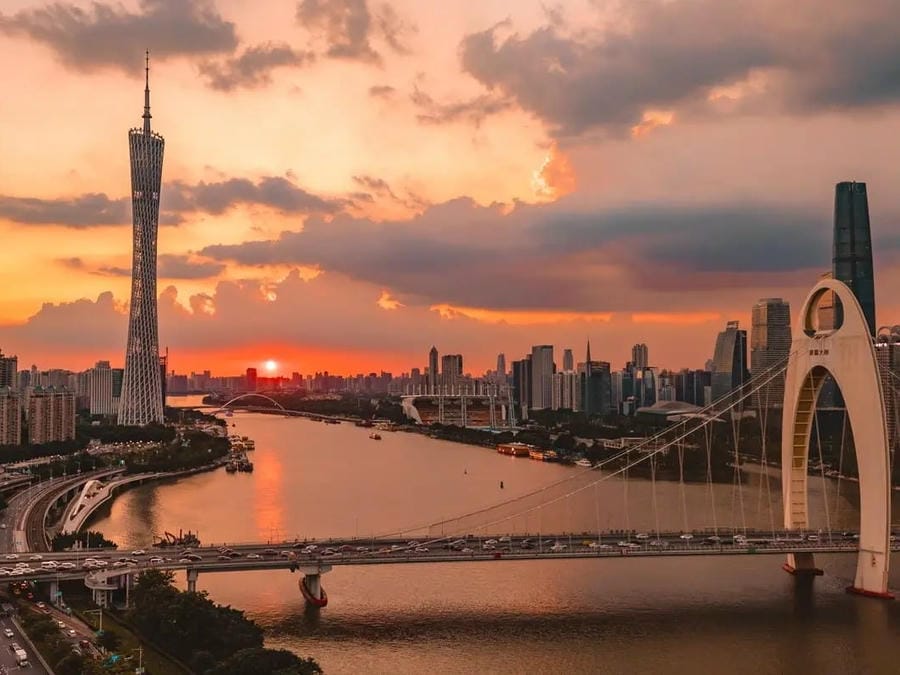
Guangzhou guide: Guangzhou for first-time visitors
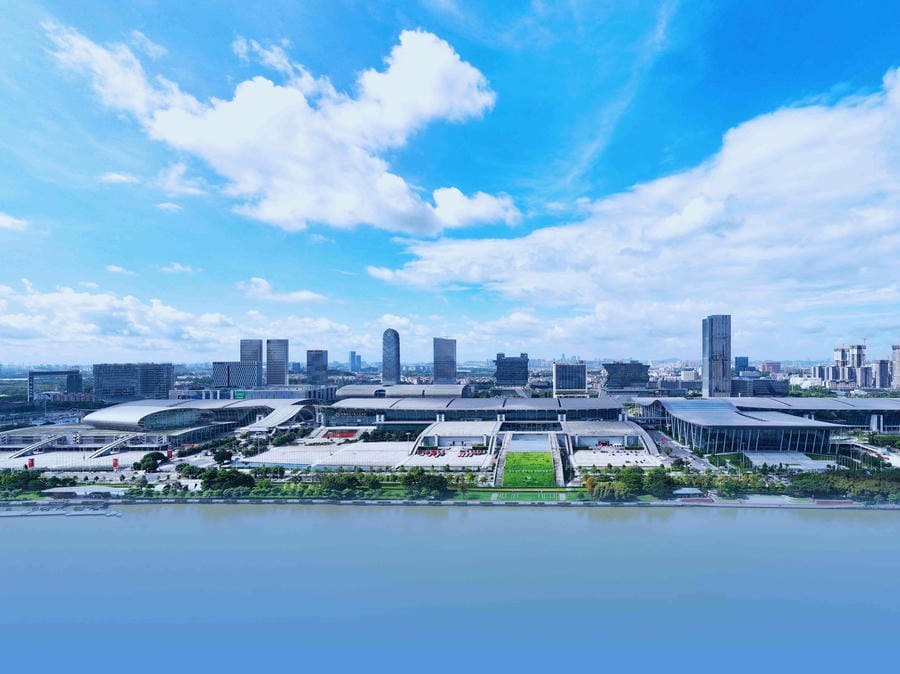
Canton Fair visitor itinerary
A Canton Fair itinerary should start with the fair schedule, not sightseeing.
Core logic:
- Choose hotel area based on fair access and meetings.
- Keep fair days focused.
- Add Guangzhou food and city time after fair hours.
- Add Shenzhen only if supplier/tech/Hong Kong route matters.
- Add Shanghai or Beijing only if you have enough days before or after the fair.
Example structure:
| Day | Focus |
|---|---|
| Day 1 | Arrive Guangzhou, check hotel, light setup |
| Day 2–4 | Canton Fair phase / meetings |
| Day 5 | Guangzhou business meals or city route |
| Day 6 | Shenzhen supplier visit or departure |
| Day 7 | Buffer, Hong Kong connection or return |
Future detailed guide: Canton Fair visitor itinerary
Train vs flight decisions inside an itinerary
Use high-speed trains when:
- stations are convenient;
- train time is reasonable;
- you want city-to-city predictability;
- luggage is manageable.
Use flights when:
- distance is long;
- rail time is too slow;
- airport is more convenient;
- route timing is better.
Do not compare only scheduled flight time. Compare door-to-door time.
Train vs flight guide: train vs flight in China
High-speed train guide: China high-speed train guide
Booking decisions before you finalize the route
Before finalizing your itinerary, check:
- entry and visa path;
- arrival and departure city;
- train or flight transfer;
- hotel area;
- attraction booking rules;
- payment setup;
- mobile data;
- map and translation apps;
- passport-based train ticketing;
- rest day or buffer.
12306’s English FAQ says foreign passengers can purchase real-name train tickets with valid passports. It also explains that e-tickets can be purchased through 12306.cn or the 12306 mobile app, station counters, automatic ticketing machines in stations selling e-tickets, or railway ticket agencies. Passengers should keep e-ticket information and the ID document used to purchase the ticket, and show that document for station and boarding checks.
12306 guide: 12306 guide for foreign travelers
Where to stay by itinerary stage
For a multi-city route, hotel area should match the itinerary stage:
- arrival city: easy airport transfer and first-night comfort;
- sightseeing city: metro and first full-day route;
- transfer city: station or airport access;
- business city: meeting district;
- Canton Fair city: Pazhou or business/fair access;
- final city: easy departure route.
Where to stay guide: where to stay in China on a first trip
Common itinerary mistakes
Do not count arrival day as a full day.
Do not add a city just because it is famous.
Do not book tight train-to-flight transfers.
Do not place the Great Wall, Terracotta Army and long transfer days back-to-back without rest.
Do not choose hotels far from the next day’s route.
Do not ignore visa-free or transit route rules.
Do not assume you can solve payments, eSIM and train tickets after landing.
Do not make a business itinerary with no meeting buffer.
Related planning guides
FAQ
What is the best China itinerary for first-time visitors?
For a first trip, Beijing + Shanghai is the easiest 7-day route, while Beijing + Xi’an + Shanghai is the classic 10-day route.
How many cities should I visit in China in 10 days?
Three cities is usually enough for 10 days. Beijing + Xi’an + Shanghai is a practical first-time route.
Is 7 days enough for China?
Seven days is enough for two cities, such as Beijing + Shanghai. It is not enough for a broad China route.
Is 14 days enough for China?
Fourteen days is enough for a broader first route such as Beijing + Xi’an + Chengdu + Shanghai, but it still requires careful transfer planning.
Should I take trains or flights in a China itinerary?
Use high-speed trains for practical city pairs and flights for very long distances or inconvenient rail routes. Compare door-to-door time.
What is a good Canton Fair itinerary?
Base the itinerary around fair days first. Stay in Guangzhou for the fair, add local business meals, and add Shenzhen or Hong Kong only if supplier or route logic makes sense.
Should business travelers add leisure cities in China?
Yes, but keep buffer around meetings. Do not schedule important meetings immediately after long transfers.
Last reviewed
Sources checked: 2026-08-02
Itinerary advice, train schedules, flight routes, attraction booking, visa-free/transit entry, Canton Fair dates and local transport can change. Recheck official transport, entry and attraction sources before publishing detailed day-by-day versions.
Sources checked
Official / authoritative:
- 12306 China Railway English FAQ
- 12306 China Railway English website
- NIA Announcement No.4 [2025] for 240-hour visa-free transit / entry route constraints
- UNESCO — Imperial Palaces of the Ming and Qing Dynasties in Beijing and Shenyang
- UNESCO — Mausoleum of the First Qin Emperor
- UNESCO — Mount Qingcheng and the Dujiangyan Irrigation System