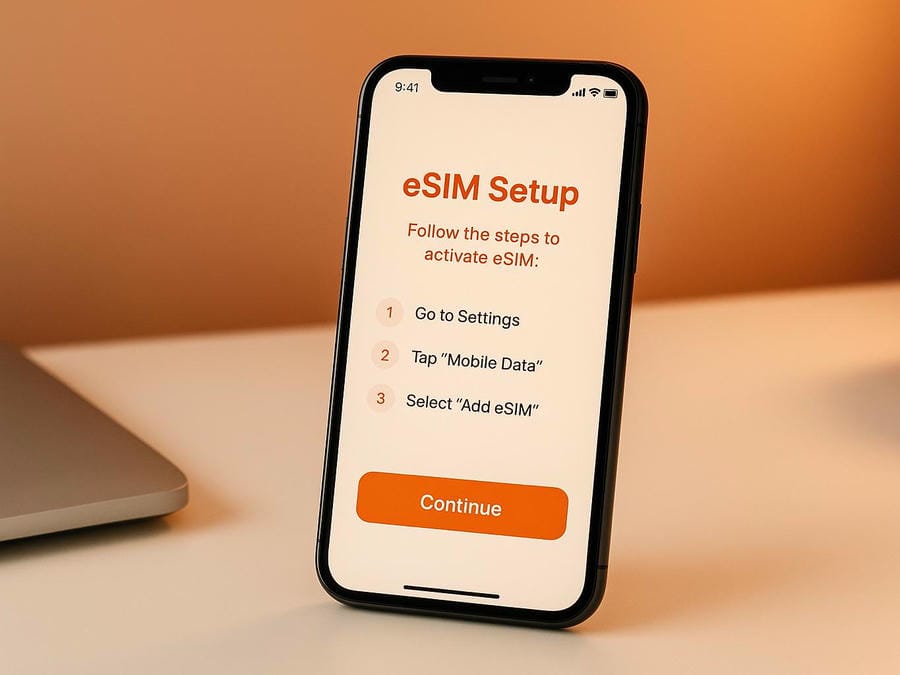
A China eSIM is usually the easiest way for short-term visitors to get internet in China after landing, but it is not the only option. Depending on your phone, travel length, app needs and budget, you may also use international roaming, a local Chinese SIM card, hotel Wi-Fi, airport Wi-Fi or a backup device.
The important point is this: do not arrive in China without a working internet plan. Mobile data affects almost every practical part of the trip, including payments, maps, translation, ride-hailing, hotel contact, train tickets and emergency communication.
China eSIM: the short answer
For most short-term visitors, the best setup is:
- Buy and install a China eSIM before departure if your phone supports eSIM.
- Keep your home SIM active for SMS if you need verification codes.
- Prepare app-access tools before landing if you rely on Google, WhatsApp, Gmail, Instagram, Facebook, YouTube, ChatGPT or other overseas services.
- Carry a payment backup because Alipay and WeChat Pay need mobile data.
- Use hotel Wi-Fi and airport Wi-Fi only as backup, not your main plan.
A China eSIM is convenient because you can set it up before flying. But most travel eSIMs are data-only. They often do not include a Chinese phone number, local calls or local SMS.
Internet in China: your main options
Foreign visitors usually have four practical ways to get online in China.
| Option | Best for | Main advantage | Main limitation |
|---|---|---|---|
| China eSIM | Short trips, first-time visitors, arrival-day convenience | Install before departure; no store visit | Usually data-only; no Chinese phone number |
| International roaming | Simple trips, business travelers with company plans | Keeps home number active | Can be expensive; app access depends on routing/provider |
| Local Chinese SIM card | Longer stays, people needing a Chinese number | Local number, local calls and SMS | Store visit, passport/ID check, setup time |
| Wi-Fi | Hotels, airports, cafes, backup use | Easy when available | Not reliable enough for payments, maps and transport |
Why internet matters more in China than many visitors expect
In China, mobile internet is not just for browsing.
You may need it to:
- pay with Alipay or WeChat Pay;
- call a Didi or taxi;
- scan restaurant QR codes;
- translate menus and signs;
- navigate metro exits and station transfers;
- contact your hotel;
- receive app verification codes;
- show bookings or ticket information;
- find your way after arrival;
- communicate with suppliers or Canton Fair contacts.
This is why “I’ll just use hotel Wi-Fi” is a weak plan for most travelers.
Related guide: Payments in China
Option 1: China eSIM
A China eSIM is a digital SIM plan that you install on your phone before or during travel. For short trips, it can be the simplest option because you do not need to find a telecom store immediately after arrival.
Apple’s support page explains that an eSIM is a digital SIM built into iPhone and can help users activate plans digitally, especially when traveling internationally. Apple also notes China-specific limitations: in mainland China, only certain iPhone models support eSIM, and activation through mainland Chinese carriers may require carrier support and in-store ID checks.
For travelers, this means you must check two different things:
- Does your phone support eSIM?
- Does your chosen travel eSIM provider support mainland China coverage for your device?
Do not assume every iPhone or Android phone supports eSIM in the same way.
How travel eSIMs for China usually work
Many travel eSIM products for China are roaming data eSIMs. They may connect to a Chinese mobile network inside China, but the plan may be issued by a carrier or provider outside mainland China.
Practical implications:
- It may be easier to buy before travel.
- It may not provide a Chinese phone number.
- App access may depend on how the provider routes traffic.
- Speeds and latency can vary.
- Hotspot/tethering may or may not be allowed.
- Some providers include access to overseas apps more easily than local SIM data, but this must be checked provider by provider.
Do not write “all eSIMs bypass China restrictions.” That is too broad and may become inaccurate.
Future detailed guide: China eSIM guide
Option 2: International roaming
International roaming means you use your home mobile carrier while in China.
This can be convenient if:
- your plan includes China roaming;
- your employer pays for roaming;
- you need to keep your home number active;
- you want SMS codes from your bank or payment apps;
- you do not want to install a new eSIM.
Limitations:
- it can be expensive;
- data caps may be low;
- speed may be reduced;
- app access depends on your carrier’s routing;
- customer support may be slow if roaming fails.
Business travelers should check roaming costs before departure. A short WeChat video call or map-heavy day can use more data than expected.
Option 3: Local Chinese SIM card
A local Chinese SIM card can be useful for longer stays or travelers who need a Chinese phone number.
Advantages:
- local number;
- local calls;
- local SMS;
- usually strong domestic network coverage;
- useful for some local services.
Limitations:
- you may need to visit a telecom store;
- passport or ID check may be required;
- setup can take time;
- English service may vary;
- app access will follow mainland China internet restrictions;
- your phone must support the right network bands and be unlocked.
Apple’s China mainland eSIM carrier notes also mention visiting China Mobile, China Telecom or China Unicom stores for ID check and activation for supported iPhone Air models. For travelers, the broader lesson is that local telecom setup can involve identity checks and store-based activation.
Future detailed guide: Chinese phone number for travel
Do you need a Chinese phone number?
Most short-term tourists do not strictly need a Chinese phone number if they have:
- mobile data;
- Alipay;
- WeChat;
- hotel contact details;
- working international SMS;
- backup payment method.
But a Chinese phone number can be useful for:
- local calls;
- some app registrations;
- delivery services;
- restaurant queues;
- some hotel or attraction systems;
- longer stays;
- business coordination;
- supplier or driver communication.
A data-only China eSIM usually solves internet access, not local phone-number access.
Option 4: Wi-Fi in China
Wi-Fi is useful as a backup but not enough as your main internet plan.
You may find Wi-Fi at:
- hotels;
- airports;
- railway stations;
- cafes;
- malls;
- some restaurants;
- exhibition venues.
Limitations:
- login may require a phone number;
- speed can vary;
- public Wi-Fi may be less secure;
- Wi-Fi may not work when you need maps, Didi or payments outside;
- some overseas apps may still be inaccessible.
Use Wi-Fi for backup, large downloads and hotel planning. Do not rely on it for arrival transport.
VPN and app access basics for travelers
Internet access in China is not the same as app access.
Even if your phone has data, some overseas websites and apps may not work normally from mainland China. This can include Google services, some social media platforms, some messaging apps, some news sites, and some work tools.
If you rely on overseas apps, prepare before you travel:
- download necessary apps before entering China;
- check whether your eSIM or roaming plan supports the access you need;
- understand that VPN reliability can change;
- do not rely on installing app-access tools after arrival;
- keep local alternatives ready.
This guide does not provide legal advice on VPN use. VPN availability and policy enforcement can change, and travelers should follow applicable laws and employer policies.
Future detailed guide: VPN and app access in China
Apps to download before China
Before departure, install and test:
- Alipay;
- WeChat;
- Didi or ride-hailing access inside Alipay/WeChat;
- translation app;
- offline translation pack if available;
- maps app that works in China;
- airline app;
- hotel app or booking app;
- eSIM provider app;
- banking app;
- 12306 or train booking app if relevant;
- Canton Fair app or registration tool if relevant.
Do not wait until landing to download everything.
Best setup by traveler type
First-time tourist
Best setup:
- China eSIM installed before departure;
- home SIM kept active for SMS;
- Alipay and WeChat installed;
- offline hotel address;
- Wi-Fi as backup.
Visa-free or transit traveler
Best setup:
- eSIM or roaming that works immediately on landing;
- airport-to-hotel transport plan;
- payment setup;
- enough data for maps, translation and ride-hailing;
- no dependency on finding a SIM store during a short stay.
Business traveler
Best setup:
- company roaming or reliable China eSIM;
- backup eSIM or second device if work-critical;
- app-access plan for Gmail, Google Workspace, Slack, Teams, WhatsApp or other tools;
- Chinese phone number if local calls or supplier coordination are important.
Canton Fair visitor
Best setup:
- China eSIM before arrival;
- backup roaming or local SIM plan;
- WeChat ready for supplier communication;
- Alipay and WeChat Pay ready for taxis and restaurants;
- power bank;
- hotel and exhibition venue addresses saved in Chinese.
China eSIM buying checklist
Before recommending or buying a China eSIM, check:
- device compatibility;
- whether your phone is unlocked;
- supported destination: mainland China, not only Hong Kong/Macao/Taiwan;
- data allowance;
- validity period;
- activation timing;
- hotspot/tethering rules;
- refund policy;
- customer support hours;
- whether app access is routed outside mainland China;
- whether it includes a phone number or is data-only;
- network partner or coverage description;
- real user reviews from recent travelers.
This checklist should become the base for future affiliate comparison blocks.
Recommended content block for affiliate version
When affiliate recommendations are added, use this format:
Recommended China eSIM options
| Best for | Provider | Why it fits | Watch out for |
|---|---|---|---|
| First-time visitor | Provider A | Easy setup, clear app, enough data | Data-only, no Chinese number |
| Heavy data user | Provider B | Larger data plans | Higher price |
| Business traveler | Provider C | Stable support, hotspot allowed | Check app access and work tools |
Add a clear affiliate disclosure before the table:
Some links in this section may be affiliate links. HalloChina may earn a commission at no extra cost to you. We only include options that fit the checklist above.
Internet backup plan for China
Use a layered plan:
- Primary: China eSIM.
- Backup: home carrier roaming.
- Local fallback: Chinese SIM if staying longer.
- Emergency: hotel/airport Wi-Fi.
- Offline backup: saved hotel address, screenshots, offline translation, power bank.
For arrival day, make sure your primary connection works before you leave the airport.
Common mistakes
Do not arrive without mobile data.
Do not assume hotel Wi-Fi is enough.
Do not assume a data-only eSIM gives you a Chinese phone number.
Do not assume every eSIM gives the same app access.
Do not forget to keep your home SIM available for bank SMS.
Do not wait until landing to download VPN, maps, eSIM or payment apps.
Do not buy an eSIM that only covers Hong Kong or Asia but excludes mainland China.
Do not forget that payment apps need internet.
Related planning guides
- SIM card vs eSIM vs roaming in China
- free Wi-Fi in China
- apps to download before China
- China internet backup plan
FAQ
What is the best way to get internet in China?
For most short-term visitors, the easiest way is to install a China eSIM before departure and keep roaming, Wi-Fi or a local SIM as backup.
Does a China eSIM include a Chinese phone number?
Many travel eSIMs are data-only and do not include a Chinese phone number. Check the provider details before buying.
Do I need a Chinese phone number to travel in China?
Most short-term tourists do not strictly need one, but it can help with local calls, some app registrations, delivery services, restaurant queues and longer stays.
Will Google, WhatsApp, Gmail or Instagram work in China?
Some overseas apps and websites may not work normally from mainland China. Prepare app-access tools and local alternatives before arrival.
Is hotel Wi-Fi enough in China?
No, not for most travelers. You need mobile data for maps, translation, ride-hailing and mobile payments when you are outside the hotel.
Should I buy an eSIM before arriving in China?
Usually yes, if your phone supports eSIM. It is easier to install and test before departure than to solve connectivity after landing.
Can I buy a local SIM card in China?
Often yes, but local SIM setup may require a store visit, passport or ID check, and time. It is better for longer stays than for a short layover.
Last reviewed
Last reviewed: 2026-07-03
Sources checked: 2026-07-03
Sources checked
Official / authoritative: