Yes, you can use Visa and Mastercard in some places in China, especially international hotels, airports, large shopping centers, and some tourist-facing businesses. But you should not rely on a physical Visa or Mastercard as your main everyday payment method.
For most foreign visitors, the better strategy is to link an overseas card to Alipay and WeChat Pay, carry the physical card for hotels and emergencies, and keep some RMB cash as backup.
Start with the full payment setup here: Payments in China
The short answer
Bring Visa or Mastercard, but do not depend on them alone.
Use cards in three ways:
- Link the card to Alipay.
- Link the card to WeChat Pay if supported.
- Use the physical card at hotels, airports, larger merchants, ATMs, and selected transport services.
Then carry RMB cash as your emergency backup.
Why cards work differently in China
In many countries, foreign visitors can pay almost everywhere with a physical credit card. Mainland China is different because daily payments are usually mobile-first and QR-code-based.
A small noodle shop, taxi, convenience store, or local ticket counter may not accept a foreign physical card. Even if the merchant accepts mobile payments, that does not mean it accepts direct card payments.
This is why linking your card to Alipay or WeChat Pay is usually more practical than relying on tapping or inserting the card directly.
Where Visa and Mastercard are more likely to work
Physical international cards are more likely to work at:
- international hotels;
- higher-end hotel chains;
- airports;
- some large shopping malls;
- some international restaurants;
- selected tourist attractions;
- selected ticket windows or machines;
- ATMs that support international cards;
- some transport systems in specific cities.
Beijing, for example, has official English guidance saying its subway launched contactless payment with overseas Mastercard and Visa cards across its urban rail network in September 2024. This is useful, but it should not be treated as a nationwide rule for every city in China.
Where physical cards may not work
Do not assume physical Visa or Mastercard will work at:
- small restaurants;
- street food stalls;
- small shops;
- local taxis;
- neighborhood supermarkets;
- small hotels;
- local-only service counters;
- smaller cities or less touristy areas.
In these places, Alipay, WeChat Pay, or cash is usually more useful.
Card inside Alipay or WeChat Pay vs physical card
This is the key difference.
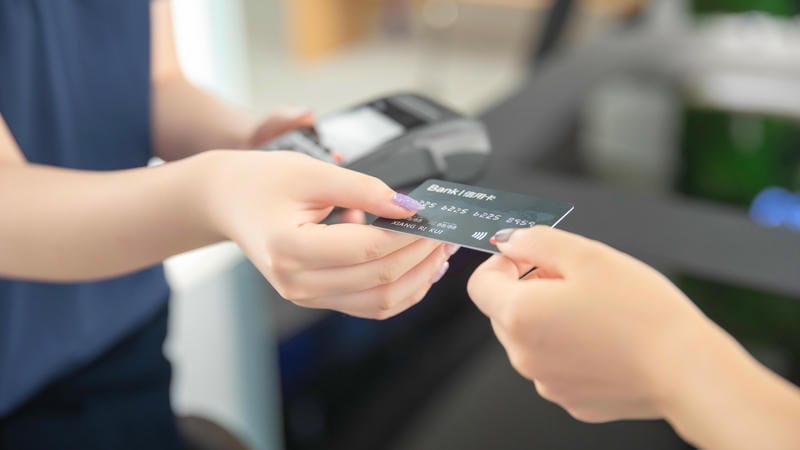
A physical card depends on whether the merchant has a terminal that accepts your card network.
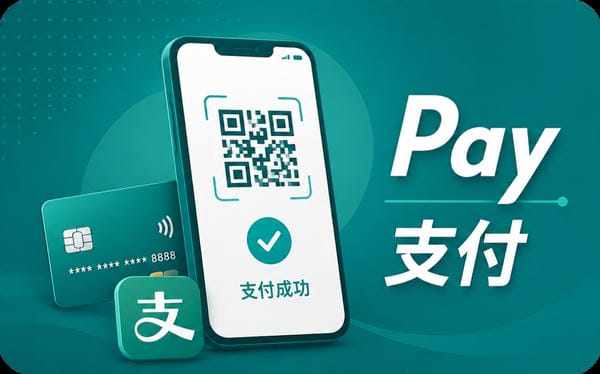
A card linked inside Alipay or WeChat Pay lets you pay through the local QR code ecosystem when supported.
For a tourist, this often makes the app-linked card more practical for daily spending than the physical card itself.
Related guides:
Which cards should you bring?
Bring at least two cards if possible:
- one main Visa or Mastercard;
- one backup card from a different bank;
- ideally not both from the same issuer;
- keep one separate from your phone and wallet.
Before departure:
- enable international use;
- check daily limits;
- check cash withdrawal limits;
- notify your bank if needed;
- make sure you know the PIN;
- save bank support contact details;
- check foreign transaction fees.
Can you withdraw cash with Visa or Mastercard?
Often yes, but not every ATM will accept every international card. Use ATMs in banks, airports, major shopping areas, or hotels when possible.
Keep in mind:
- your bank may charge fees;
- the ATM operator may charge fees;
- exchange rates vary;
- your card may have a daily withdrawal limit;
- some machines may fail even when your card is valid.
Cash guide: cash in China for tourists
Using cards for hotels
Hotels are one of the most important physical-card use cases.
Before booking, check:
- whether the hotel accepts international cards;
- whether the same card must be presented at check-in;
- whether a deposit is required;
- how the deposit is refunded;
- whether business invoice needs affect payment method.
For business travelers and Canton Fair visitors, this matters because company cards, deposits, and invoice requirements can be more complicated than ordinary tourist payments.
Using cards for transport
Some city transport systems are improving foreign-card access. Beijing is one example where overseas Visa and Mastercard contactless card payment has been officially announced for the subway.
But China is not one single transport payment system. Shanghai, Guangzhou, Shenzhen, Beijing, Chengdu, Xi’an, and smaller cities can differ.
For transport, prepare several methods:
- Alipay transport code where supported;
- WeChat transport code where supported;
- ticket machines or counters;
- physical card where the city supports it;
- local transport card;
- cash backup.
Transport payment guide: how to pay for transport in China
Common card problems
The merchant does not accept foreign cards
Use Alipay, WeChat Pay, or cash. Do not assume the issue is your bank; it may be the merchant’s payment setup.
Your bank blocks the transaction
Open your banking app or contact your bank. Use a second card if needed.
The ATM rejects your card
Try a different bank ATM in a secure location. Do not keep trying repeatedly at the same machine.
The app-linked card fails
Try a smaller transaction, a different card, or the other app. Some failures are due to verification, limits, merchant category, or bank risk controls.
The hotel deposit is confusing
Ask how the deposit will be held and released. Keep receipts and screenshots of payment records.
Best card strategy for China
Use this stack:
- Link your main card to Alipay.
- Link a card to WeChat Pay if possible.
- Carry the physical card for hotels and ATMs.
- Carry another backup card.
- Carry RMB cash.
- Keep mobile data working.
Full backup plan: China payment backup plan
Official policy sources to check
China entry and transit rules can change by nationality, port, routing and date. Before relying on this guide, check the National Immigration Administration update on the 240-hour visa-free transit policy, the NIA visa-free transit policy explainer, and the relevant Chinese embassy or visa center page for your country.
Use this article as a planning framework, then verify your passport validity, onward ticket, eligible route and permitted stay area against the official source before you book a non-refundable itinerary.
FAQ
Can I use Visa in China?
Yes, but not everywhere. Visa is more useful at hotels, airports, larger merchants, ATMs, and when linked to a payment app.
Can I use Mastercard in China?
Yes, but like Visa, it should not be your only payment method.
Can I use Apple Pay or Google Pay in China?
Do not rely on them as your main payment method in mainland China. Alipay, WeChat Pay, physical card, and cash are more practical.
Should I bring cash even if I have cards?
Yes. Cash is an emergency backup when cards or apps fail.
Is UnionPay better in China?
UnionPay is widely used in China. If your bank issues a UnionPay card, it can be a useful extra backup. Most short-term visitors do not need to open a Chinese bank account just for a short trip.
Last reviewed
Last reviewed: 2026-07-01
Sources checked: Chinese Embassy / PBOC payment guide; Beijing official overseas bank card subway/payment pages; 12306 official English FAQ for train ticketing context.