China can be very convenient once your payment setup works. The difficult part is arriving with only a foreign credit card and expecting it to work everywhere.
For most short-term visitors, the safest setup is simple:
- Set up Alipay before you travel.
- Set up WeChat Pay as a backup.
- Carry some RMB cash for emergencies.
- Bring at least one physical Visa or Mastercard, but do not rely on it for everyday spending.
- Make sure your phone has reliable internet access in China.
You usually do not need a mainland Chinese bank account for a normal tourist trip. But you should not rely on just one payment method.
The short answer
For a first trip to China, use this payment plan:
- Main method: Alipay or WeChat Pay with an overseas bank card.
- Backup app: the other mobile payment app.
- Emergency backup: RMB cash.
- Hotel and larger payments: physical Visa, Mastercard, or another international card where accepted.
- Transport backup: cash, station counters, hotel help, or a ride-hailing method already set up inside Alipay or WeChat.
This setup covers most practical situations: taxis, metro rides, restaurants, convenience stores, train tickets, hotels, and small daily purchases.
Why payment in China feels different
In many countries, visitors can rely on credit cards, contactless cards, Apple Pay, Google Pay, or cash. Mainland China is different.
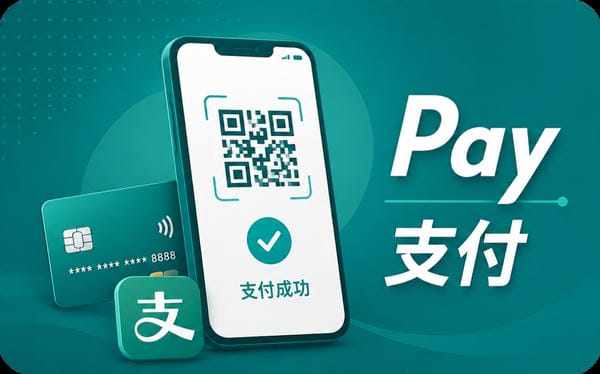
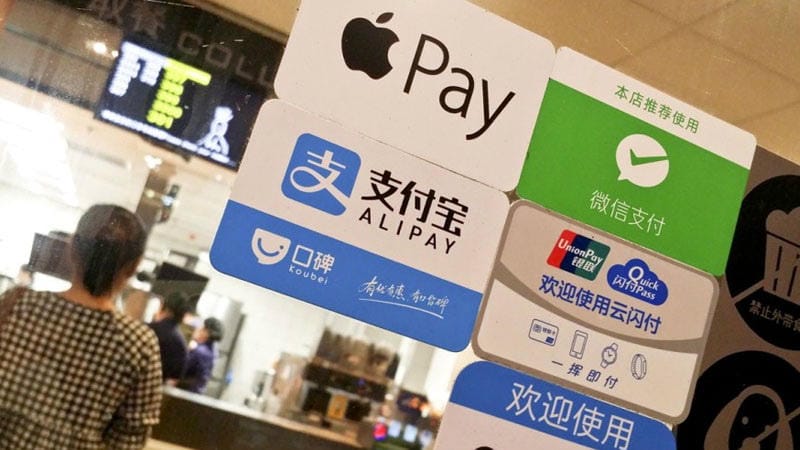
Daily payments are usually built around QR codes and mobile apps. At restaurants, small shops, taxis, convenience stores, and street stalls, people often pay by scanning a QR code or showing a payment code inside Alipay or WeChat.
Foreign cards are becoming easier to use in China, especially through mobile payment apps. But a physical Visa or Mastercard is still not a reliable everyday payment method at small local businesses.
Payment options for foreign visitors
1. Alipay
Alipay is often the first app foreign visitors should try. It is widely used for QR code payments, restaurants, shops, taxis, ride-hailing, and some transport services.
A practical setup is:
- Download Alipay before departure.
- Register with your mobile number.
- Add your passport or identity information if requested.
- Link an international bank card.
- Keep the app updated before you enter China.
In China, you will usually pay in one of two ways:
- You scan the merchant’s QR code.
- The merchant scans your payment code.
Alipay rules, card support, limits, and fees can change. Check the latest in-app instructions before publishing or before travel.
Detailed guide: Alipay in China for foreigners
2. WeChat Pay
WeChat Pay is also widely used in China. It is especially useful because many daily services in China are connected to WeChat, including mini programs, restaurants, local services, and some transport or booking tools.
A practical setup is:
- Download WeChat before departure.
- Complete account registration and security checks.
- Open WeChat Pay / Wallet if available in your region.
- Add an overseas bank card if supported.
- Complete identity verification if requested.
For foreign-card users, WeChat Pay may work mainly for consumption payments. Some social payment functions, such as transfers or red packets, may not be available or may require additional verification.
Because WeChat registration can sometimes be more sensitive than Alipay registration, do not leave this until you are standing at the airport taxi queue.
Detailed guide: WeChat Pay in China for foreigners
3. Cash
Cash is still useful in China, especially as a backup. It can help when:
- Your phone battery is low.
- Your mobile payment app fails.
- Your overseas card is declined.
- A small merchant cannot process your payment app.
- You need to pay a taxi driver, hotel deposit, or small local expense.
That said, cash is not always convenient. Some small shops may not have enough change. Some staff may be more used to QR code payments than cash. Carry smaller notes when possible.
Do not build your entire China payment plan around cash, but do not arrive with zero RMB either.
Detailed guide: cash in China for tourists
4. Visa, Mastercard, and other international cards
Bring at least one physical international card, but treat it as a backup rather than your main daily payment tool.
International cards are more likely to work at:
- International hotels
- Larger hotel chains
- Some airports
- Higher-end restaurants or shops
- Some tourist-facing businesses
They may not work at:
- Small restaurants
- Street food stalls
- Local convenience stores
- Small taxis
- Local-only ticket counters
- Smaller cities or less touristy neighborhoods
If your card works inside Alipay or WeChat Pay, that will usually be more useful than trying to tap or insert the physical card directly.
Detailed guide: Visa and Mastercard in China
5. UnionPay
UnionPay is China’s main card network. A UnionPay card can be useful if your bank issues one, especially for ATMs and card terminals in China.
Most foreign visitors will not need to open a Chinese bank account just for a short trip. But if you already have access to a UnionPay card, it can be a useful extra backup.
6. e-CNY
Official payment guidance may mention e-CNY, China’s digital yuan. For most first-time foreign visitors, it should not be your main payment method unless you have a specific reason to use it and clear setup instructions from an official channel, bank, or local service provider.
For ordinary travel, Alipay, WeChat Pay, cash, and a physical bank card are more practical.
What to set up before you fly to China
Do these before departure:
- Install Alipay and WeChat.
- Link at least one international bank card to Alipay.
- Try to link one international bank card to WeChat Pay.
- Complete identity verification if the app asks for it.
- Enable international card usage with your bank.
- Bring a second card from a different bank if possible.
- Prepare some RMB cash or plan where to withdraw/exchange it after arrival.
- Set up your eSIM, roaming, or China mobile data plan.
- Save your hotel name and address in Chinese.
- Keep screenshots of booking confirmations, but do not rely on screenshots for live QR code payments.
The phone and internet step matters. Mobile payment apps need data, SMS verification may be required, and some services may not work smoothly if your phone cannot connect reliably.
Related guide: China eSIM and internet guide
How to pay in common travel situations
Airport to hotel
Best options:
- Alipay or WeChat Pay for ride-hailing if already set up.
- Official taxi queue plus cash backup.
- Hotel-arranged pickup for late-night arrivals or business travelers.
Do not assume every taxi can take a foreign physical card.
Metro and city transport
Best options:
- Alipay transport code where supported.
- WeChat transport code where supported.
- Ticket machines or service counters.
- Local transport card in some cities.
Some cities have improved support for overseas cards, but this is not yet something visitors should assume nationwide. Check the city you are visiting.
Detailed guide: how to pay for transport in China
Restaurants and cafes
Best options:
- Scan the restaurant’s QR code with Alipay or WeChat.
- Show your payment code if the cashier scans customers.
- Use cash as backup.
In some restaurants, ordering and payment may happen through a QR code on the table. If the menu is only inside WeChat or Alipay, ask staff for help if the page does not load.
Convenience stores and supermarkets
Best options:
- Alipay or WeChat Pay.
- Physical card only in larger or more international locations.
- Cash backup.
Taxis and ride-hailing
Best options:
- Ride-hailing inside Alipay or WeChat if available.
- Didi or another ride-hailing app if set up.
- Cash backup for traditional taxis.
Before taking a traditional taxi, it is reasonable to confirm that cash is accepted if you do not have mobile payment working.
High-speed trains
Best options:
- Book in advance through 12306 or a travel platform.
- Use Alipay, WeChat Pay, or an accepted card depending on the platform.
- Keep your passport with you; ticketing and station entry are linked to ID.
Hotels
Best options:
- International card at larger hotels.
- Alipay or WeChat Pay at many local hotels.
- Cash backup for deposits or unexpected problems.
For business travelers and Canton Fair visitors, confirm accepted payment methods with the hotel before arrival, especially for deposits, invoices, and company card use.
A practical payment backup plan
Use this four-layer backup plan:
Layer 1: Alipay with your main card.
Layer 2: WeChat Pay with the same or a different card.
Layer 3: Physical card for hotels, ATMs, and larger merchants.
Layer 4: RMB cash for emergencies.
Also keep:
- A power bank.
- A second bank card.
- Your passport.
- Your hotel address in Chinese.
- A working data plan.
- Bank support contact details.
Most payment problems are manageable if you have another payment method, internet access, and enough cash to move from one place to another.
Detailed guide: China payment backup plan
What to do if your payment fails
If a payment does not go through, try this order:
- Check your mobile data connection.
- Try the other app: Alipay or WeChat Pay.
- Try a different linked card.
- Try a smaller transaction amount.
- Ask the merchant whether they can scan your code instead.
- Use cash if the merchant can accept it.
- For hotels or larger purchases, try your physical card.
- Contact your card issuer if the card is blocked.
Do not keep retrying the same failed card many times. It may trigger additional fraud checks from your bank.
Common mistakes to avoid
Do not arrive with only a physical Visa or Mastercard.
Do not assume cash alone will be convenient.
Do not wait until landing to install Alipay and WeChat.
Do not forget that your phone needs internet access.
Do not assume every city, metro system, taxi, or merchant has the same foreign-card support.
Do not rely on Apple Pay or Google Pay as your main payment method in mainland China.
Recommended setup by traveler type
First-time tourist
Use Alipay as the main method, WeChat Pay as backup, and carry RMB cash.
Visa-free or transit traveler
Set up at least one payment app before departure. For very short stays, cash and hotel-arranged transport can reduce risk.
Business traveler
Set up both Alipay and WeChat Pay. Bring a company card, a personal backup card, and cash for transport or small expenses. Confirm hotel deposit and invoice arrangements before arrival.
Canton Fair visitor
Set up both payment apps before reaching Guangzhou. Keep extra backup because taxis, restaurants, supplier meetings, printing shops, samples, and local transport may involve many small payments.
FAQ
Can foreigners use Alipay in China?
Yes, many foreign visitors can use Alipay in China by registering and linking an overseas bank card, but supported cards, limits, verification rules, and fees may change. Set it up before departure and check the latest in-app instructions.
Can foreigners use WeChat Pay in China?
Yes, WeChat Pay can support overseas cards for certain users and consumption scenarios. Some functions, such as transfers or red packets, may be limited for users without a mainland Chinese bank card.
Can I use cash in China as a tourist?
Cash remains useful as a backup, and RMB cash is an official payment method. In practice, QR code payment is more common in daily life, and some merchants may have limited change.
Can I use Visa or Mastercard in China?
Yes, but not everywhere. Physical Visa and Mastercard are more likely to work at larger hotels, airports, and international businesses. For everyday spending, linking the card to Alipay or WeChat Pay is usually more practical.
Do I need a Chinese bank account to travel in China?
Usually no. Short-term visitors should normally prepare Alipay, WeChat Pay, a physical international card, and cash backup instead of opening a mainland bank account.
What is the best payment app for tourists in China?
For most first-time visitors, Alipay is a good first app to set up, with WeChat Pay as an important backup. The best choice can depend on your card, phone number, verification status, and the services you plan to use.
How much cash should I bring to China?
Bring enough RMB cash to cover basic emergency needs such as transport, simple meals, and a short payment app failure. Avoid relying only on cash for the entire trip.
What happens if my phone battery dies?
You may lose access to mobile payments. Carry a power bank and keep a physical card and some cash separate from your phone.
Last reviewed
Last reviewed: 2026-07-01
Sources checked: 2026-07-01
Sources checked
Official / authoritative:
- Chinese Embassy in the UK — Guide to Payment Services in China
- Beijing Municipal Government — How can Foreigners Use WeChat Pay?
Supporting context: